

Clearing the cobwebs
How to remove your photographic rust and find your creative flow

Ironically, running a photography business leaves very little time for my own photography.
Like most people, I spend more time than I’m happy to admit working on non-photography-related tasks behind a computer screen.
I have family obligations, work responsibilities, and a life, like most people, that keeps me locked in place for much of the year.
Sometimes it feels like an eternity before I can pack up my camping rig, leave the city behind, and photograph the places and subjects that inspire me.
I don’t say that to complain, only to say that I deal with many of the same challenges most people do.
I find that after I spend more than a few days, weeks, or months away from my craft, I feel rusty when I first pick up the camera again.
The buttons and settings don’t feel as effortless as they once did. I make technical mistakes. I feel a little out of sorts and unsure of what to do.
That never really seems to change, no matter how long I’ve been practicing photography or how much I’ve improved over the years.
Every time I want to return home to my photographic process and find my creative flow again, I need to “clear the cobwebs,” so to speak.
Here is the simple process I’ve developed to do just that:
Slow
Clear
Allow
Notice
I call this process SCAN, for short.
I use it pretty much every time I need to clear the cobwebs.
If you’ve been feeling stagnant or resistant to making your work, especially after some time off, this process will likely help you, too.
I’ll cover each step here.
1. Slow down
I rarely show up somewhere with my camera and immediately know what I want to photograph.
My ability to see is like a scared puppy that refuses to come out of its kennel. I need to coax it out gently, with patience and kindness, and give it the time it needs to feel safe (and of course, give it lots of treats!).
Perhaps you’ve noticed your vision acts the same way, too.
Most of us live at a pace that does not prepare us to observe the world mindfully, which is essential for deeper seeing.
Most people are constantly doing, not being.
If you are like me, you spend most of your time thinking and worrying about everything not happening in the present moment; the Now.
Technology, and our culture’s toxic obsession with notification checking and screen scrolling, keep our brains and nervous systems in a chronic state of fight or flight.
You cannot expect to see deeply in this state.
When we pick up the camera, even in a beautiful place, we don’t just snap out of this mindless state immediately.
The first step to snapping out of this mental trance is to slow down.
What I like to do is stay in one place longer than feels necessary.
I sit down, or stand still, and just observe. I don’t do anything else. I don’t check my phone or even pick up my camera.
It’s really that simple.
If you struggle with this, set a timer for 20 minutes and just park yourself somewhere without doing anything except noticing what you observe. Marinate in your surroundings.
Turn your phone off or silence it. The “Do Not Disturb” button is a beautiful thing. So is the Freedom App. Use it
Most people won’t do this. Then they wonder why they struggle to see.
Slow down first, my friend. Give yourself enough time to let your visual senses feel safe enough to emerge from wherever they are hiding.
Patience is a photographic virtue.
2. Clear your mind
I’m a chronic overthinker. I often arrive at a place with expectations, ideas, plans, and anxiety already running in the background.
I want to create something “good.” And because photography is also my livelihood, I feel an added sense of pressure.
When my mind is crowded like that, I have a hard time dropping into my creative flow.
Clearing the cobwebs is about clearing my mind, since that’s where the cobwebs actually exist.
(Side note: I should probably call this step “settle your mind,” since it’s impossible to actually clear your mind of thoughts. But for the sake of the easy-to-remember acronym, I’ll keep going with “clear”.)
My anxious, hypervigilant, neurotic tendencies have forced me to learn practices that help me to settle my mind and return to the present moment.
For me, these practices are typically meditation, breathwork, journaling, or simply sitting still for a while and paying attention to what is happening in my body. Whatever it takes to regulate my nervous system and reconnect with my Self.
Try one of those practices, or any method that helps quiet your mind, reconnect you to your being, and center you in the present moment.
The more connected you are to your Self, the more you can attune to what is, rather than what could be, or should be, or isn’t.
The more fully present you are in the Now, the more connected you become to your physical sensations, your emotions, and, most importantly, your intuition.
That is the place authentic photographs come from.
3. Allow (the garbage to flow)
When I’m clearing the cobwebs, I start by making a lot of “warm-up” shots.
Pretty much all of them are terrible.
This is a polite way of saying I make a lot of crap.
At this stage of the process, my goal is to purge the bad stuff out of my system. The what-the-F-was-I-thinking shots.
This is the part where I encourage you to let the garbage flow.
Embrace this as part of the process. Let it be messy. Nobody will ever see it, so who cares what imperfect or ridiculous stuff you make?
Lighten up and have fun with it! This is a time to play and not take your craft (or life) so seriously.
In my experience, this feels a lot like warming up before exercise. I’ve been running almost every day for the last twenty years, and I almost never start out feeling great. Every morning, I start my run feeling stiff, clunky, resistant, and sometimes even cranky.
Then, at some point, it starts to feel good. My body opens up and I find a comfortable rhythm.
I’ve accepted that every time I run, I have to get through the stiffness and the crankiness to get to the other side.
Warm-up photographs are very much like that.
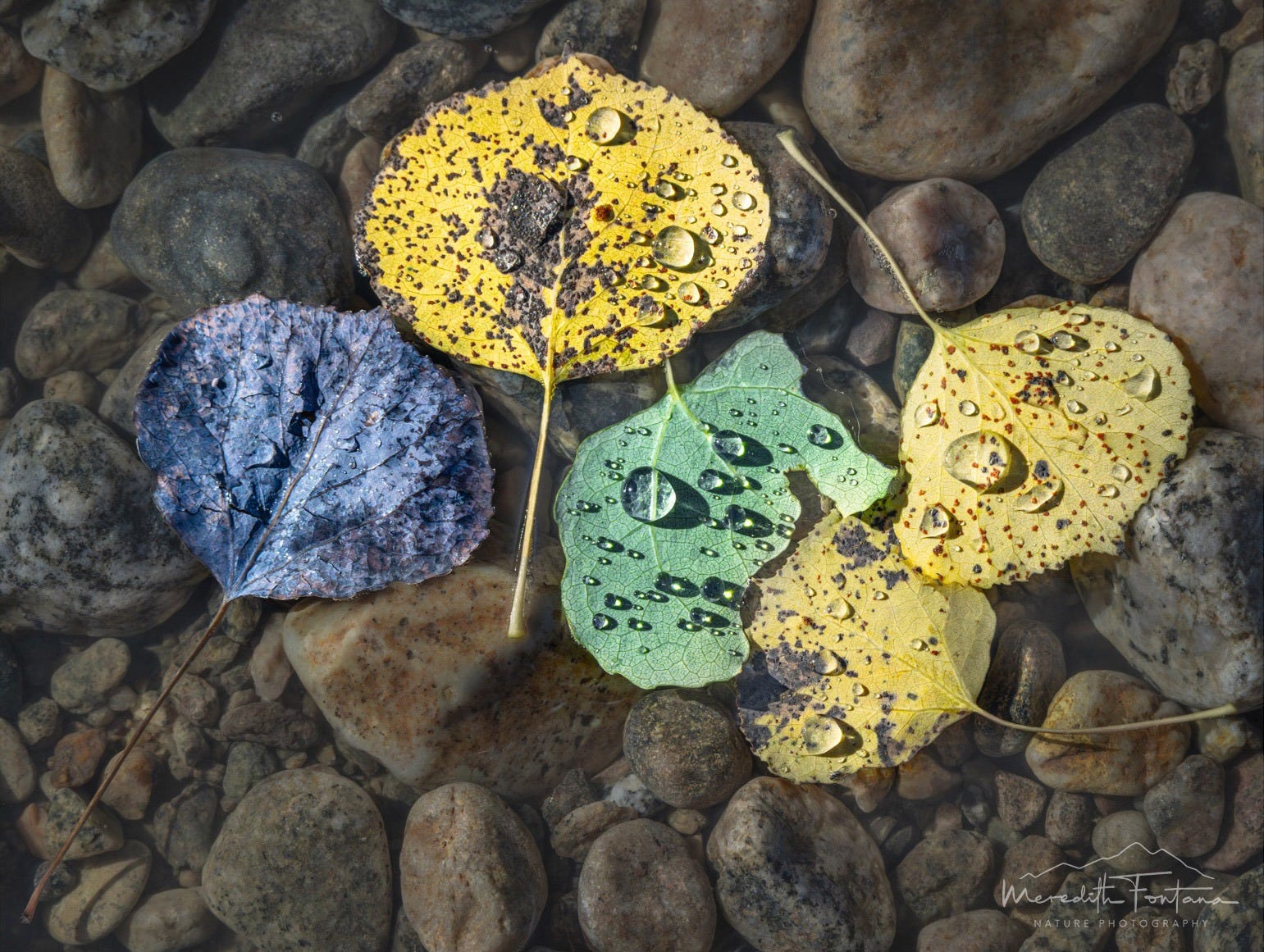
You might feel resistance at this stage, especially if you are a perfectionist.
I think a lot of photographers resist getting started because they expect to jump in right away with their cameras and know exactly what they are doing. They want to start creating great stuff right away.
In my experience, it never really works that way.
The point of this step is to reconnect my hands, eyes, and intuition. It takes the pressure off starting the whole creative process.
It makes stepping back into the work feel easier and more natural.
It has nothing to do with achieving any specific outcome beyond that.
4. Notice what happens
If I’ve made it through the first three steps above, there usually comes a point when something shifts.
I almost always enter into a state of creative flow. It may or may not last for long. Sometimes a few minutes, sometimes a few hours.
You will know it when you feel it. Time disappears. You lose yourself in the process of making images.
I’ll save my thoughts on flow-state for another day, but to me, this is the holy grail for any artist or creative practice.
Creative flow is the experience that I crave, as it’s where I find the purest form of joy while making. Maybe you can relate.
When you are in a flow state, you are fully connected to your Self, your intuition, your abundance, and the Source of all creation. That’s why it feels so good.
This is the state where your authentic photography and art will emerge.
Here we have come full circle, from mindless scroller to conscious creator, fully immersed in the present moment.
Pay attention to what you notice in this state. Notice it as if you were an observer outside of yourself.
Notice what you notice. What subjects, colors, compositions, etc. do you feel drawn to? What excites you? What creative impulses are you experiencing?
What you notice will reveal your unique way of seeing.
Until next time, thank you for reading.
— Meredith
📸 What’s next?
I’m ready and waiting to support you in the next stages of your nature photography and artistic journey. Here’s a reminder of how I can help:
Nature Photography Academy — Now 100% FREE to join! 🎉🎉🎉: Join the #1 most inspiring, supportive community for nature and landscape photographers who want to create authentic and meaningful work through genuine human connection, thoughtful feedback, and intention-driven practice.
1-1 Private Instruction: I offer private 1-on-1 instruction for photographers who want focused, short-term support on specific skills, techniques, or creative challenges.
Mentorship: For those ready for deeper transformation and sustained growth, I also offer a structured, long-term mentorship designed around artistic voice and body of work development — book a qualification call here.
I’d be so grateful if you shared this post with a friend. It’s the #1 thing you can do to support my work. :)